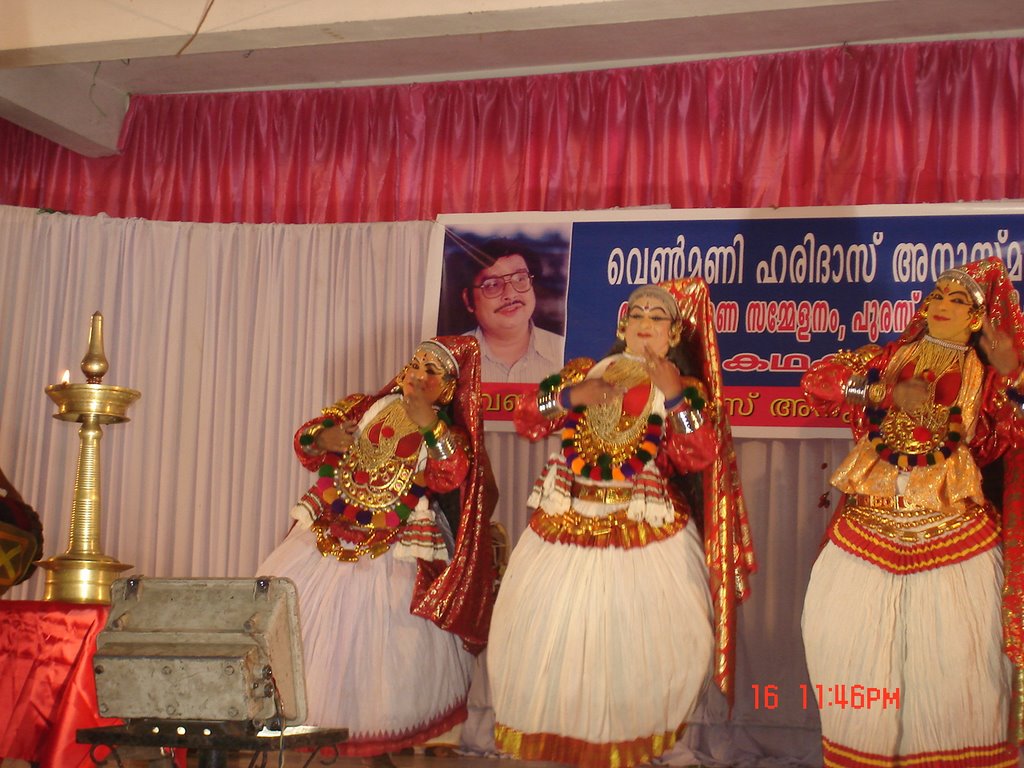
Nala and Damayanthi got married. Nala and Damayanthi enjoys by talking various things and they go to Nala's garden. Damayanthi is astonished to see that beautiful garden. Then they spend some time in the garden. In the next scene, Kali and Dwapara see each othen on their way to earth and during their talk, both realised that they are in fact going to the same place- For marrying Damayanthi (Both of them are unaware that Damayanthi is already married). They decided to go together and they see Indra, Agni, Yama and Vayu coming from earth back to heaven. Kali and Dwapara salutes them and asks whe
 re are you coming from? Indra will tell that they are coming back from long distanceand he asks where Kali is going? Kali tells that he is going to marry Damayanthi. Indra laughs at him and tells that Damayanthi's marriage with Nala is over and that they are coming back after attending that marriage ceremony. Kali got anger and he blames them for just attending the marriage function instead of marrying her. Then Kali decided to separate Nala from Damayanthi and also to get them out of their country. Kali and Dwaparan thinks about the palns to cheat Nala and th
 ey decided to meet Pushkara (A distant relative of Nala). Kali can live in somebody if they do some bad things. When Kali observe Nala, he realised that Nala is perfect in all aspect. He waits in a tr
 ee for 12 years and at last one day he saw that Nala fogot to put water on his leg's backside when he pray to God. So Kali enter Nala's body. In the third scene, they came to Pushkara's palace and meets him. Pushkara starts telling his worries to them and then Kali starts telling lot o
 f things to Pushkara and he successf
 ully influenced and changed the mind of Pushkara. Kali told him to call Nala for playing game of dice and tell that Dwapara (In the form of an ox) will be given if he looses the game. Pushkara agreed to this and he challeges Nala. Nala came there and he looses in the game. The punishment is to live in jungle forever. Nala and Damayanthi went to jungle to keep the promise. Pushkara orders the people in the country, not to give even a piece of cloth to them. In the jungle, Kali in the form of a bird will come and take Nala's cloth away. When Damayanthi sleeps in Nala's lap, due to the effect of Kali, Nala goes away from there and when Damayanthi wakes up, she see that Nala is miss
 ing. She cries in search of Nala in that big jungle. At that time a snake catches Damayanthi's leg and started swallowing her. She cries loudly. A hunter in that jungle hear this sound and he saw Damayanthi. He kills that snake. Damayanthi expresses her gratitude to him. But he asks her to live with him. Atlast as there is no other way to escape from him, Damayanthi curses him and he burnt into ashes due to he curse. (Normally till here is shown in stages). Then Damayanthi wanders in the jungle and she meets some traders
  and with their help,, she reaches Chedi country and she becomes a servant of the queen over there. Sudevan, a brahmin sent by Damayanthi's father to find Damayanhi reaches there and realised that this servant is Damayanthi. thus Damayanthi reaches her Father's palace. This is Nalacharitham -part II. The characters are:

 Duryodhana approaches Sakuni, his uncle. Duryodhana’s padam starts with- mamatha wari rashe---- in which he expresses the shameful incident which happened to him and how he feels hurt and humiliated by the laughter of Bhima and Draupadi. Sakuni tries to console him. Padam- Paritapam hriti karutidenta--- in which he tells Duryodhana how he can defeat Pandavas by cheating in the game of Dice. He also tells Duryodhan
 a to seek permission from his father and invite Yudhishtira for the dice game. Duryodhana happily agrees to the plan.
 mayhem, but it is decided by Lord Brahma that kings should play the game of dice. So I will play without any worries after offering prayers to Lord Krishna.” (Duryodhana expresses his irritation upon hearing the word Lord Krishna). Dharmaputhra continues “But my brother Duryodhana and my uncle Sakuni - please don’t cheat me in the game.” Sakuni replies,” What is the use of cheating in the game of dice. Don’t tell such nonsense. As per God’s wish, victory and defeat will come. Dharmaputhra, please do come and sit with us for the game”.
 Then the game starts. Dharmaputhra starts seeing his defeat. He gambles away not only his army, palace, wealth and kingdom, but also one-by-one all his brothers, himself and their wife-in-common - Draupadi. Duryodhana overwhelmed with joy orders Dussasana to bring Draupadi and commands her to do the servile job. When she refuses to come there, Dussasana pulls her hair and drags her to the court. She asks for mercy and nobody including her husbands (because they are now servants of Duryodhana) hears her plea. She prays to Lord Krishna to help her. Dussasana tries to disrobe her in public. Lord Krishna helps Draupadi as a savior. Draupadi
  curses them, “Sakuni, who cheated my husbands in the game of dice and made them servants, will be killed by Sahadev during the battle. Dussasana who tried to humiliate me in front of the public will be killed by Bhīma and Bhīma would rip him open and drink his blood and my own hair would remain disheveled until the fulfillment of the curse. Bhima will kill Duryodhana by crushing his thigh with the gada.” [Drutharashtra tells Draupadi to stop the curses and tells her to ask anything she wants. She asks her husbands along with their weapons back. She got her husbands back. This part is not shown generally.] As a result of the second dice game Duryodhana orders, “Hey Pandavas! Live in thick forest for 12 years. And 13th year, lived incognito. If you are recognized during that period, the same will be repeated again.”
 Draupadi comes near Lord Krishna, “Krishna, When Dussasana tried to humiliate me in front of the public, you only saved me from the humiliation. Krishna, when you are going to ask for our portion, you please remember my disheveled hair.”
 Krishna addresses Duryodhana. Krishna requested him to give half of his country, then five villages, or five houses or at least one house to Pandavas. Duryodhana refuses to give even to give space taken by a needle point. Duryodhana in a fit of rage orderes Dussasana to get a cord to tie Krishna. Krishna takes the Vishwaroopa(his cosmic form) and all Kauravas in the court fell down except all Mumukshu (noble hearted people). These Mumuksu told Duryodhana to
  give whatever Krishna requested to save his own life. Lord Krishna leaves the palace; Duryodhana and Dussasana wake up and decide to go ahead with the battle.
 and seeing all brothers and relatives in the battle field, Arjuna fainted. Then Krishna adviced the Great “Gita”. Then Arjuna became strong and started the battle.]
 the “Gadha” on the thighs of Duryodhana. Bhima did the same and Duryodhana fell down. Then Bhima told each and every bad thing happened in Pandava’s life because of Duryodhana and at last Duryodhana passed away. Then “Vethalams” came there and did some dances to express there joy.]
 rrying the dead body of a new born baby and he tells that his eight kids died upon birth and this is the dead body of the ninth one. He wanted to show this to Balarama and Krishna and ask them to help him. Lord Krishna and Balarama won't mind him at all. Hence non of the Yadavas will mind him. After some time, Lord Krishna and Balarama will go out of the Sabha without telling even a single word. Arjuna is not able to tolerate the condition of Brahmana.Arjuna will tell that he will give the next baby who will born for this brahmin. Then Brahmin will start accusing Arjuna out of desperation and when Lord is also helpless, he lost all his hope. Atlast Arjuna will tell that if he is not able to save the next baby from death, he will jump into fire along with his great bow and arrow. When Arjuna promises in the name of Lord Krishna's lotus-legs, Brahmana became happy and he left the place.
 In due time, the Brahmana wife will become pregnant. She will tell Brahmana that the delivery is going to happen soon. So please inform Arjuna immediately. Then Brahmana will call a "Vayattatti" (Mid-wife) to take care of his wife. He then went to Dwaraka to see Arjuna.
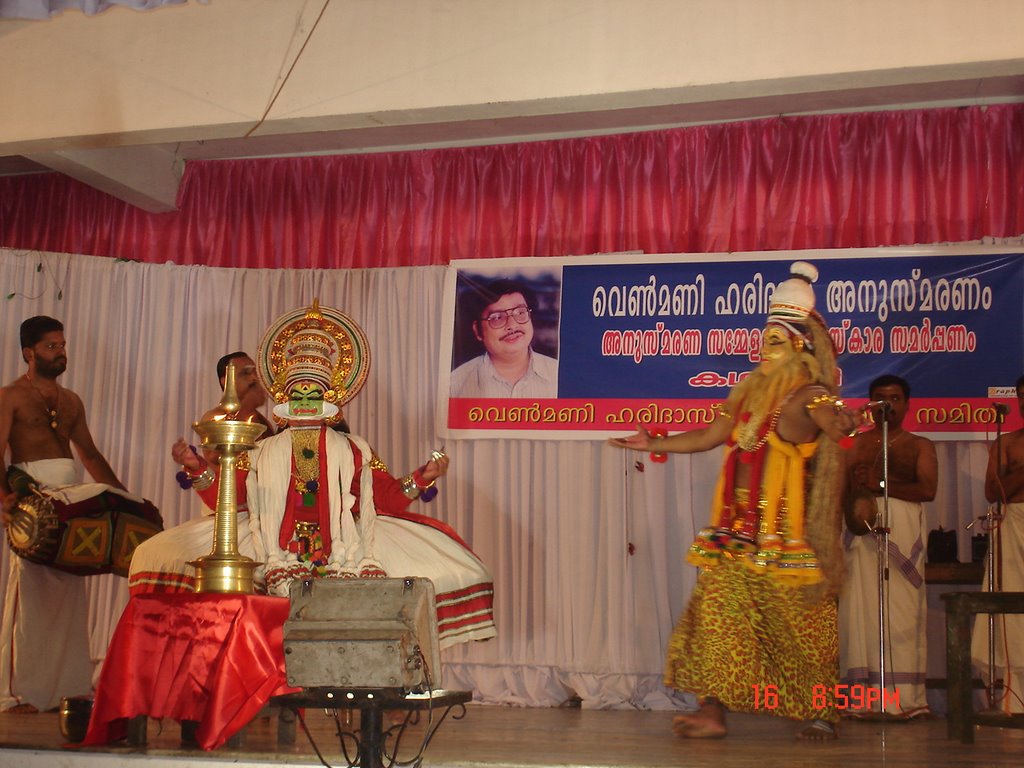 Nala, the king of Nishadha is famous for his good charecters. He is very generous, kind and affectionate towards the people in his country. He is handsome too. One day Sage Narada arrives at his palace. Nala with great respect and fear, welcomed him and asked him about the reason behind that arrival. Sage Narada mentioned about Damayanthi, the beautiful daughter of King Bhima. He also mentioned that she is well suited to him as his wife. Then sage left from the palace. Nala, who already heard about Damayanthi before from others, now become more affected. His love towards her increased and he is not able to do any work. So he gave the administration responsibilties to his ministers and left to sit alone for some time.
 Nala tried to do many activites like doing some instruments, but everything ended up in thinking of Damayanthi. Then he decided to go to the garden. In garden the mell of flowers, the cacophony of birds etc irritates him. At that moment he saw a lot of swans in the pond. He got some sort of relaxation by seeing the swans and he noticed that one golden color swan sleeps on one corner of the pond lonely. Its body is completely gold in color. Nala slowly catched the swan using his hand and the swan woke up with a shock. It tried to flew away from there, but was already in Nala's hand. The swan started crying. the swan told that because of the gold on its
 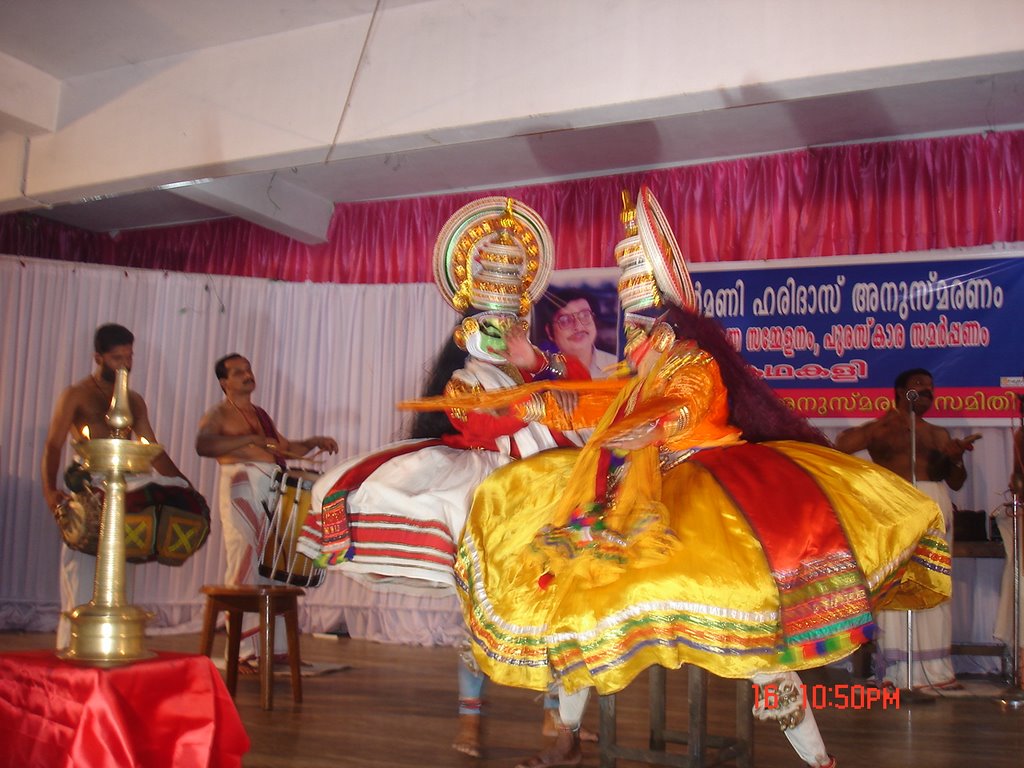 body, Nala is not foing to become rich. Nala is surprised when he hear the voice of the swan. It speaks just like a human. The swan also added that its father is died, he is the only son, his wife and children will become widow and orphans. then Nala told him that he don't want to kill the swan. He caught the swan out of curiosity and Nala freed the swan. The swan flew away. Nala again started thinking about Damayanthi. Soon the swan came back and started showing the symbols of affection towards Nala. The swan then told like this,"Hey Nala, I haven't seen such a generous person in my life time. You are a very good personality. As you let me free, I would like to do a favour for you. Damayanthi, the daughter of Bhima is a beautiful princess and she will be the best suite for you. I will do the necessory things for your marriage". Nala replied him to do the needful at the earliest and the swan flew away towards Damayanthi.
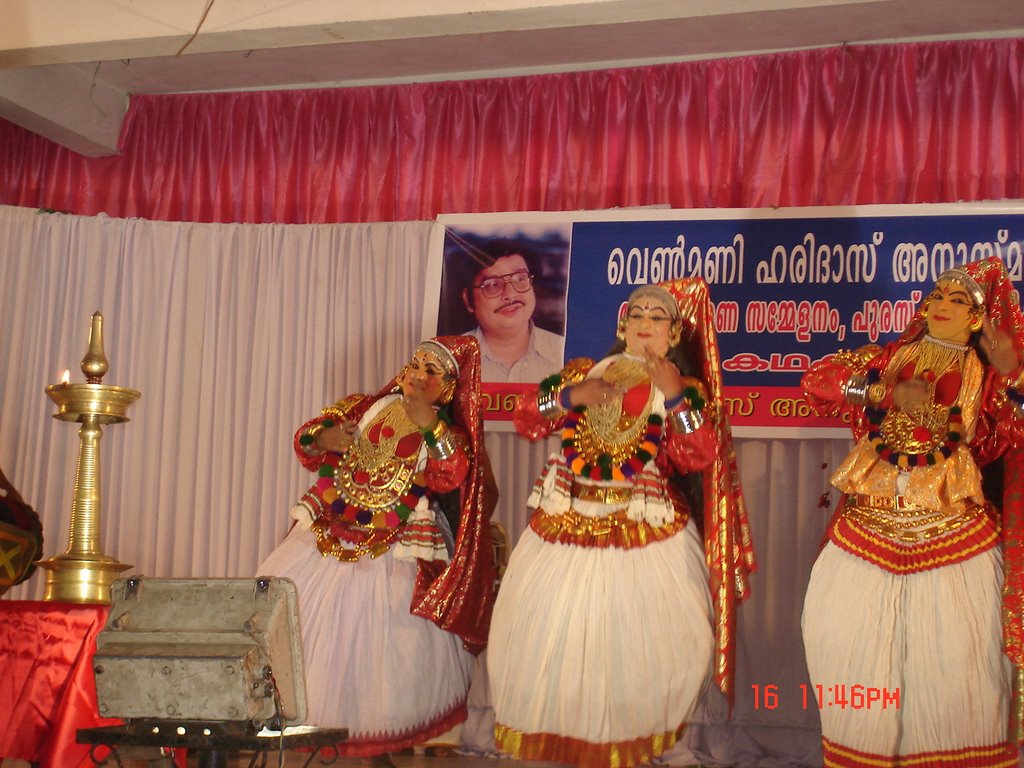 The case of Damayanthi was not different. She heard about the good charecteristics of Nala from many people and she was also thinking only about him. Damayanthi along with her friends came to the garden and played for some time. Then she told her friends that she wanted to greturn to the palace. Then her friends replied,"When we were in the palace you told that you want to go to garden, when we are in the garden, you are telling that you want to go to palace. What is this? You see there are beutiful flowers here and very sweets sounds of birds etc.". But for her the smell of flowers and the sound of birds were irritating.
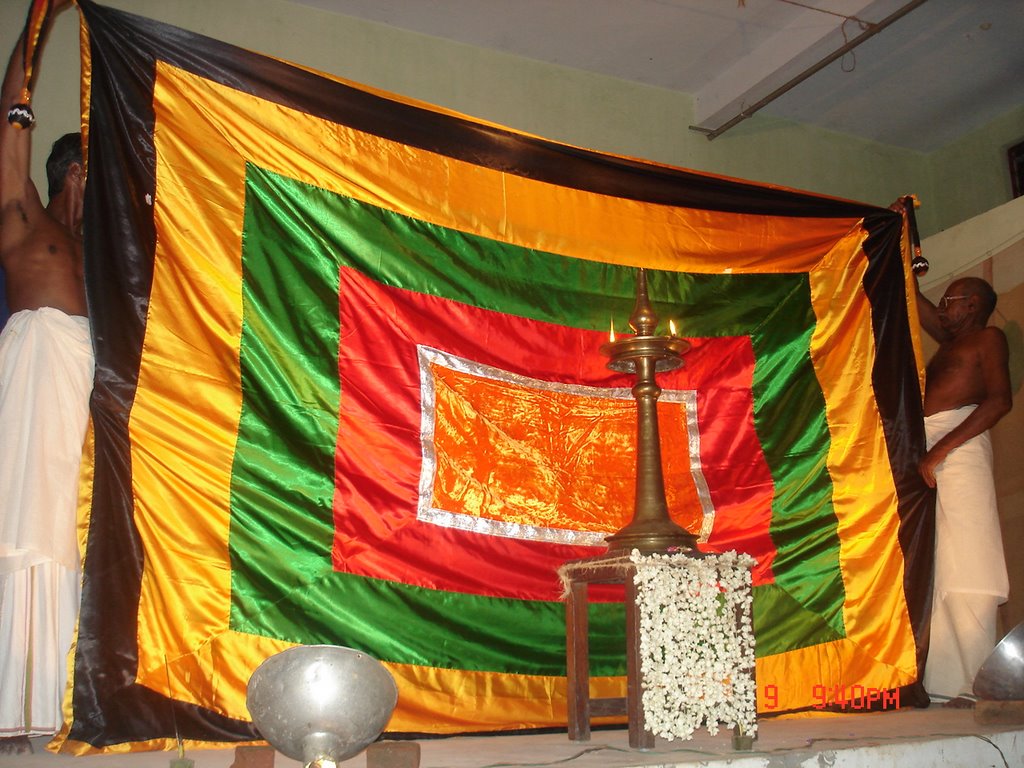 Curtain (called as Tirasseela) is used just like that used for any other drama performances mainly between different scenes. This is usually a multi-colored cloth piece bigger enough to cover the entire stage. Two people will hold it on both sides whenever required.
I hope you enjoyed the last post. Now I would like to post something regarding the different types of dress forms in Kathakali. The major types are:
Pacha
Katti
Tadi
Minukku
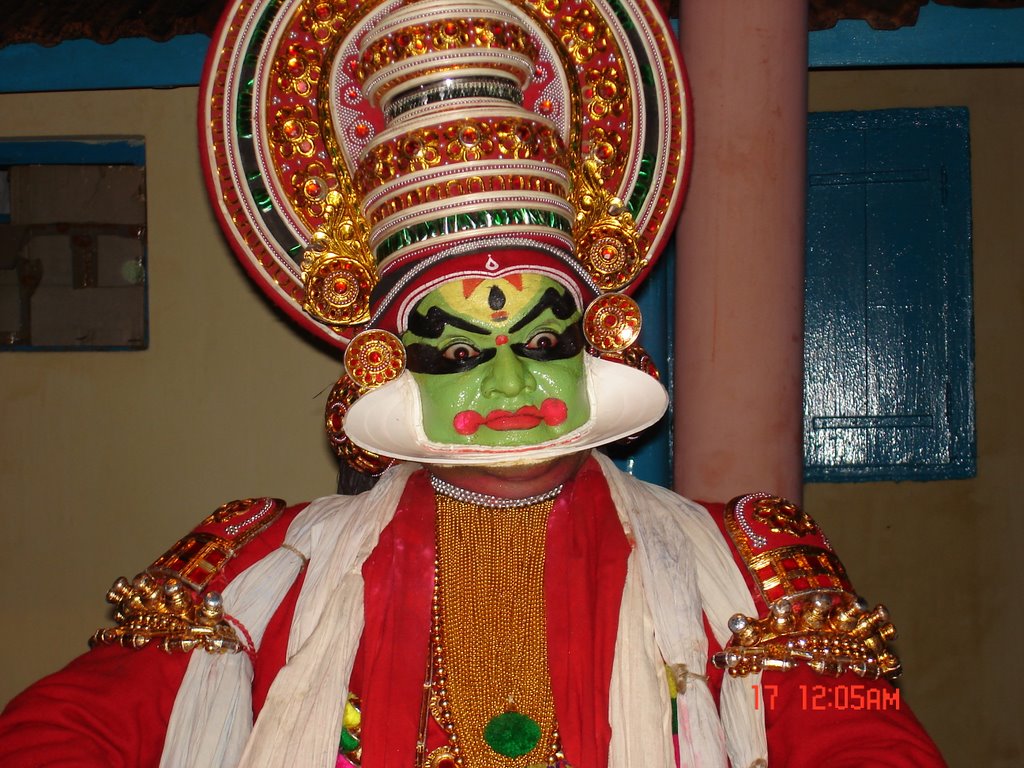
Pacha is the form of dress mainly used for people who are "Satwik" in nature. Usually good characters like Krishna, Arjuna, Sree Rama, Nala etc. will have this form of make-up. Where Krishna and Sree Rama belongs to a special class of Pacha called as "Krishna Mudi" -means they will have small crown which is decorated with beautiful iridescent blue-green or green colored plumage. Others will wear a round shaped crown. Generally they are good characters.
We will see each one now.
Red Tadi is basically for the charecters having "Tamasa" behaviour. The examples includes Dussassana (brother of Duryodhaha), Bali, Sugreeva, Trigartha (A companion of Duryodhana) etc. who are very rude in their behaviour. They will have a huge red colored beard in their face. White Tadi is for the charecters like Hanuman and Nandikeswaran. They have a white beard in their face. Similarly the Black Tadi charecters have a black beard in their face. The main charecter in this make-up is Hunter (Kattalan - people living in jungle). Some other examples are Guhan in Sreeramapattabhiskekam (Sree Rama becomes the King of his country), Malayan in Nizhalkuttu (Killing using shadow) etc. There is another type of Kari for bad female charecters. They have complete black make-up similar to the male Kari charecters. The examples include Soorppanakha in Ramayanam, Pootana in Pootanamoksham (Moksha of Pootana), Nakratundi in Narakasuravadham (Killing of Narakasura) etc.
Now with respect to Minukku, there are several categories. Ladies, Sages, Brahmins( people belongs to the upper cast in Hindu mythology). They have very simple make-up system as compared to the above described systems.
Even though these are the main types of charecters, there are several charecters having different style of make-up. Examples are Hamsam in the story of Nala-Damayanthi, Jadayu in the story of Rama etc are birds having a beak fitted in their mouth and wings attached to it. Another category is charecters like Valalan (Name of Bhima during the period of Ajnatavasa) and servant in Uttaraswayamvaram (Marriage of Uttara), Mannan (Washer man) in Lavanasuravadham (Killing of Lavanasura). There are some funny chareters also in Kathakali. These jokers are named as Bheeru or Peeru. They will make-up not according to the rules of Kathakali. Some other rare charecters are Angatan in Balivadham (Killing of Bali), Buffallow in the story of Nala, Mandara in the story of Rama etc.
I think that is enough for now. How are you feeling about Kathakali now? Are you getting bored because of these? Then expect something else soon. What can we discuss next?
The basic process in Kathakali?
or
somethnig else? wait... wait....
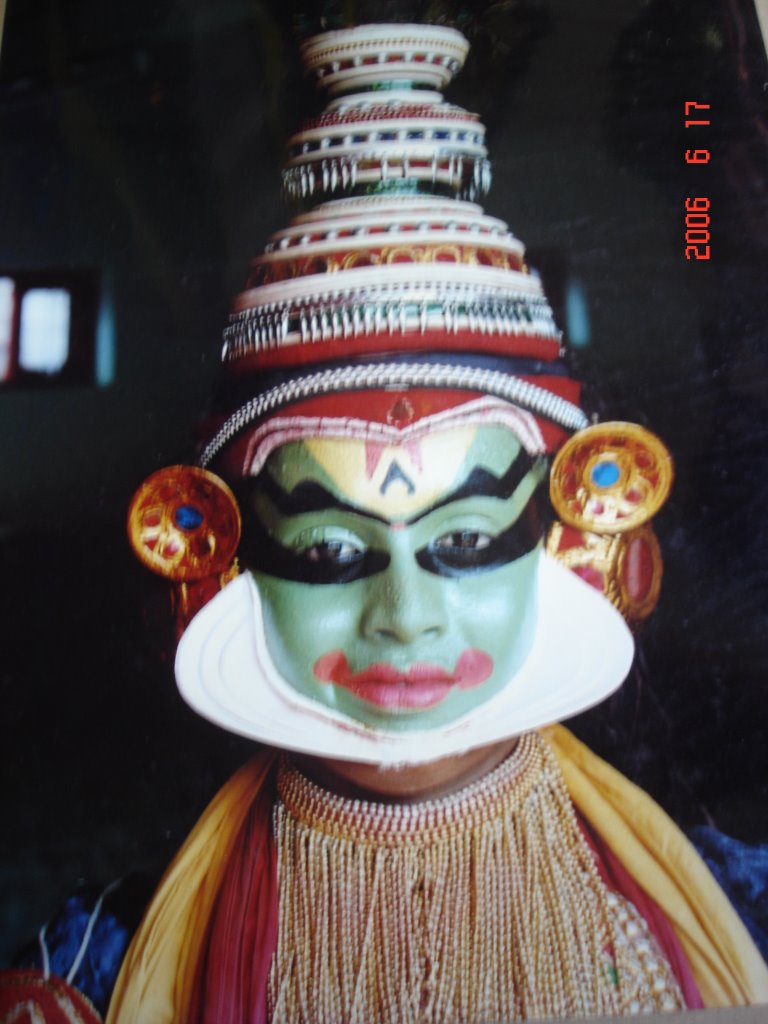 Every country or region has its own traditions and practices. No place is an exception for that. There are many art forms which are formed and developed in Kerala. I want to throw a light on some of them. It includes the world famous Kathakali, U. N. recognized Kootiyattam, Mohiniyattam etc...